

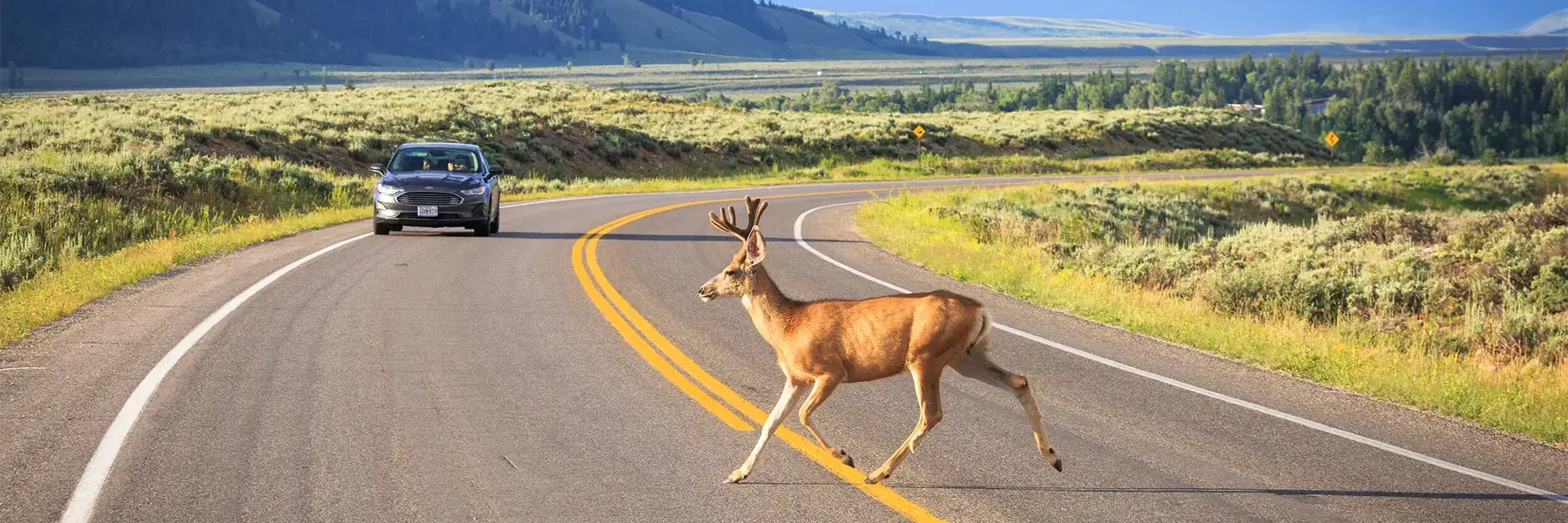
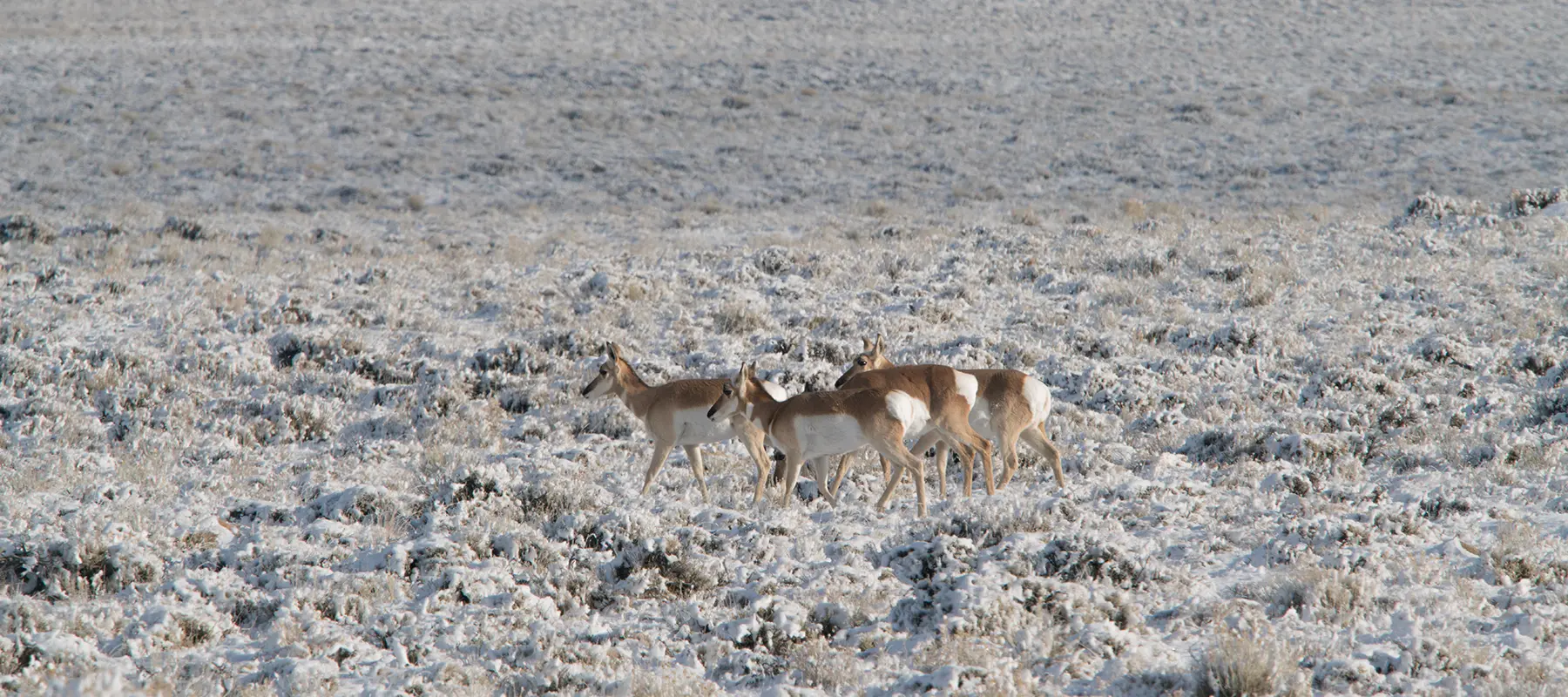
Grand Teton National Park (GTNP) protects large expanses of high elevation, mesic sagebrush-steppe grasslands that support many species of mammals and birds. These resources also connect similar habitats in a large portion of the Greater Yellowstone Ecosystem.
In the early 1900s, several thousand acres of sagebrush in the Kelly area were cultivated for hay production prior to the establishment of this part of the park. In some areas, cultivation continued into the 1970’s, at which point the National Park Service acquired the remaining lands, agricultural use was phased out, and the hayfields were abandoned.
Since 2009, GTNP has been working to restore 4,500 acres of converted hay fields to their natural sagebrush conditions—conducting controlled experiments, initial restoration, and an adaptive management approach to achieve long-term, high quality ecological restoration goals. This project is a conservation objective that takes decades to fully achieve.
Restoration involves a multi-year, multi-step process that includes the removal of nonnative hay crop, the collection and propagation of native seeds both on and off-site, several years of replanting fields with native species, and ongoing monitoring and treatment of invasive plants.
Currently, approximately 1,500 acres of the Kelly Hayfields are considered to be in various stages of restoration, and results have shown the restoration efforts to be highly effective at restoring the land to productive, naturally-functioning and resilient sagebrush-grassland habitat.
This is an ongoing, multi-year project with an annual budget of approximately $406,500. WYldlife for Tomorrow has contributed $25,000 to efforts thus far, and we would like to acknowledge the important collaboration of numerous partners: Grand Teton National Park Foundation, Grand Teton National Park, Teton Conservation District, National Fish and Wildlife Foundation, US Fish and Wildlife Service, University of Wyoming, Alpyn Beauty, and various individual donors.
