

Elk are a primary prey species for grizzly bears and wolves, two animals that are highly sought after for wildlife-viewing and ecotourism in the Jackson area. Elk also provide hunters with a sustainable food source and outdoor experience, as well as support local hunting outfitters, hotels, and other businesses during the fall.
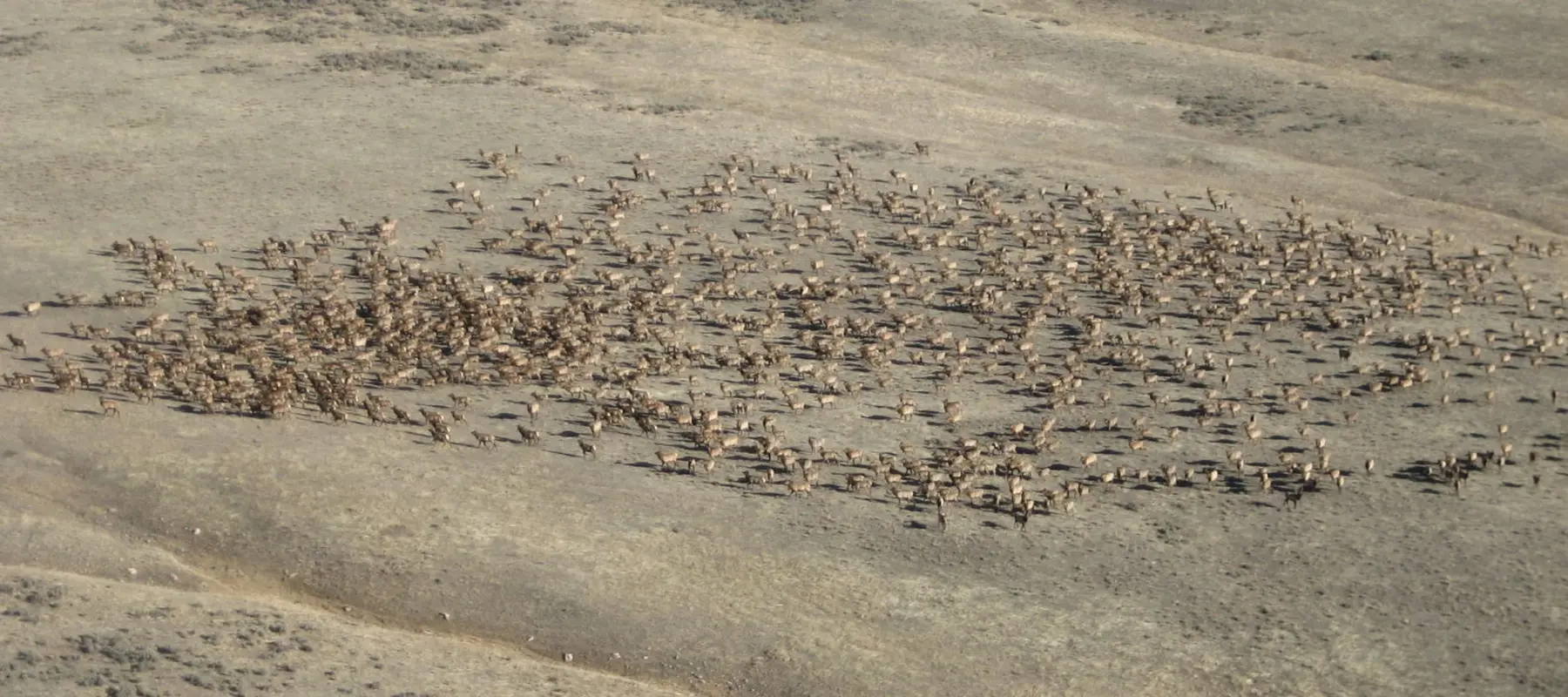
The Jackson Elk Herd is one of the largest elk herds in North America, numbering 11,000 animals. The majority of the herd spends the winter on the National Elk Refuge, adjacent to downtown Jackson; in the spring, the herd migrates out to various summer ranges from Grand Teton and Yellowstone National Parks to the Teton Wilderness, Gros Ventre Mountain Range, and private land along the Snake River.
Given the enormity of this herd and the vast expanse of land it occupies, management and conservation can be challenging. What’s more, in recent years elk have been changing their seasonal movement patterns and wintering in different areas.
To better manage this herd, biologists need to gather more robust data, a goal that is achieved through GPS-collaring of individual elk within the herd. These collars collect a GPS location approximately every hour, providing important movement data, and automatically drop off the elk after 3 years. Currently, researchers aim to collar 20-50 elk per year for this ongoing, multi-year project, but this will depend on the available funding. Depending on need, researchers would also like this funding to be applied to the Fall Creek Elk Herd, which lives on the southern end of Teton County and faces many of the same challenges as the Jackson Herd.
Elk are typically captured using a net-gun fired from a helicopter, which costs approximately $750 per elk. Additionally, each GPS collar costs approximately $1,600. Based on this, the project budget ranges between $47,000 for the low end of elk captures and $117,500 for the high end.
WYldlife for Tomorrow has donated $20,000 for this important research, and we are proud to be partners alongside the Wyoming Game and Fish Department, the National Elk Refuge, Grand Teton National Park, the Bridger-Teton National Forest, Rocky Mountain Elk Foundation, Wyoming Animal Damage Management Board, and Wyoming Governor’s Big Game License Coalition.
